
Introduction
Altus Airflow focuses on developing advanced healthcare infrastructure that supports surgical precision, environmental safety, and efficient hospital operations. A Cardiac Modular Operation Theatre requires specialized monitoring systems to maintain controlled environmental conditions and provide medical teams with essential information during complex cardiac procedures. These systems help monitor air quality, temperature, humidity, pressure differences, equipment performance, and patient-related parameters. Integrating suitable monitoring technologies into the operating theatre helps hospitals maintain consistent operating conditions, improve workflow management, and support patient safety.
Modern cardiac operating theatres combine environmental monitoring, medical equipment monitoring, and digital control technologies. Understanding these systems helps hospitals select suitable infrastructure for their surgical requirements.
1. What Are Monitoring Systems in a Cardiac Operating Theatre?
Monitoring systems are specialized technologies designed to continuously observe and display important operational and environmental parameters inside an operating theatre.
In cardiac surgery, maintaining a controlled environment is essential because procedures can be complex, lengthy, and dependent on specialized medical equipment.
These systems help healthcare professionals monitor different aspects of the theatre, including:
Temperature and relative humidity.
Air pressure differentials.
Airflow and ventilation performance.
Air filtration system status.
Medical gas supply conditions.
Electrical power availability.
Surgical equipment performance.
Patient vital signs.
Monitoring technologies provide real-time information that helps technical and clinical teams identify abnormal conditions and respond appropriately.
2. Temperature and Humidity Monitoring Systems
Temperature and humidity monitoring systems are essential components of modern operating theatres.
Maintaining appropriate environmental conditions supports patient comfort, equipment performance, and infection prevention practices.
Temperature sensors continuously measure the room temperature and display readings through digital monitoring panels. Hospital staff can use these readings to identify deviations from established operating parameters.
Humidity monitoring is equally important. Excessively high humidity can contribute to condensation and moisture-related problems, while very low humidity may increase static electricity concerns.
Important features include:
Digital temperature displays: These provide real-time readings and help staff identify environmental changes.
Humidity sensors: These measure relative humidity and support environmental control.
Alarm notifications: Alerts can notify authorized personnel when readings move outside predefined limits.
Centralized monitoring: Multiple environmental parameters can be displayed through an integrated control interface.
Regular calibration and sensor maintenance help ensure accurate readings.
3. Air Pressure Differential Monitoring Systems
Pressure differential monitoring is another important technology used in cardiac operating theatres.
Operating theatres are designed with specific pressure relationships between different rooms and adjacent spaces. These pressure arrangements help manage airflow movement and support infection control strategies.
Digital pressure monitoring systems measure the pressure difference between the operating theatre and connected areas.
Their important functions include:
Displaying real-time pressure readings.
Identifying abnormal pressure changes.
Providing visual or audible alarms.
Supporting ventilation performance assessments.
Maintaining monitoring records.
For example, if the pressure relationship changes because of an HVAC malfunction or an improperly closed door, the monitoring system can alert authorized personnel.
Hospitals should establish pressure requirements according to applicable healthcare design standards and their infection prevention protocols.
4. Air Quality and HEPA Filter Monitoring Systems
Air quality monitoring is particularly important in cardiac surgical environments because airborne contamination must be carefully controlled.
Advanced ventilation arrangements commonly use high-efficiency particulate air filters to reduce airborne particles.
Monitoring systems help evaluate the performance of filtration and ventilation equipment.
Important monitoring features include:
Filter pressure-drop monitoring: Differential pressure sensors help identify increasing resistance across filters, which may indicate filter loading.
Airborne particle monitoring: Suitable particle counters can measure airborne particle concentrations during environmental testing and performance assessments.
Filter integrity testing: Specialized testing verifies whether HEPA filters are installed correctly and perform according to their specified requirements.
Ventilation status monitoring: Control systems can display the operating condition of air handling equipment and associated components.
It is important to understand that a filter pressure alarm does not independently confirm HEPA filter integrity. Separate testing is necessary to verify filtration performance.
5. HVAC Performance Monitoring Systems
The HVAC system maintains essential environmental conditions inside an operating theatre. Monitoring its performance helps hospitals identify ventilation problems before they affect surgical activities.
A modern HVAC monitoring arrangement may include:
Air handling unit status indicators.
Supply and return air temperature sensors.
Filter differential pressure sensors.
Fan operating status.
Airflow monitoring.
Humidity measurements.
Ventilation control alarms.
These systems provide information about the condition of the ventilation infrastructure.
For example, if an air handling unit stops operating unexpectedly, the monitoring system can generate an alarm. Maintenance personnel can investigate the issue and take corrective action.
Centralized building management systems can also integrate HVAC monitoring with other hospital infrastructure controls.
However, environmental monitoring should complement, not replace, regular ventilation validation and preventive maintenance.
6. Medical Gas Monitoring Systems
Cardiac procedures require reliable medical gas infrastructure. Monitoring systems help hospitals observe the availability and pressure conditions of essential medical gases.
Commonly monitored medical gas supplies include:
Oxygen.
Medical air.
Vacuum.
Nitrous oxide, where applicable.
Other gases required by the hospital's clinical configuration.
Medical gas alarm panels are generally installed in suitable locations to provide warnings when supply pressure falls outside the specified range.
These systems may include:
Area alarm panels: Display the operating condition of medical gas supplies in designated areas.
Master alarm panels: Provide centralized notifications about important medical gas system conditions.
Pressure sensors: Monitor supply pressure and identify abnormal readings.
Emergency notifications: Alert authorized technical personnel when a supply problem occurs.
Medical gas monitoring systems should be designed, installed, and tested according to applicable medical gas standards and hospital requirements.
7. Electrical Power and UPS Monitoring Systems
Continuous electrical power is essential for cardiac operating theatres because several medical devices must remain operational throughout surgical procedures.
Power monitoring systems help hospital technical teams observe electrical infrastructure and identify potential problems.
Important components include:
UPS monitoring: Tracks the operating condition, battery status, and available backup power.
Electrical distribution monitoring: Provides information about electrical parameters and distribution equipment.
Isolation transformer monitoring: In applicable isolated power systems, line isolation monitoring devices identify insulation-related problems.
Generator monitoring: Displays the operating condition and availability of backup generators.
Power failure alarms: Notify technical teams about interruptions or abnormal electrical conditions.
These systems help hospitals maintain electrical reliability and prepare for unexpected power disturbances.
Regular electrical inspections and functional testing remain essential for safe operation.
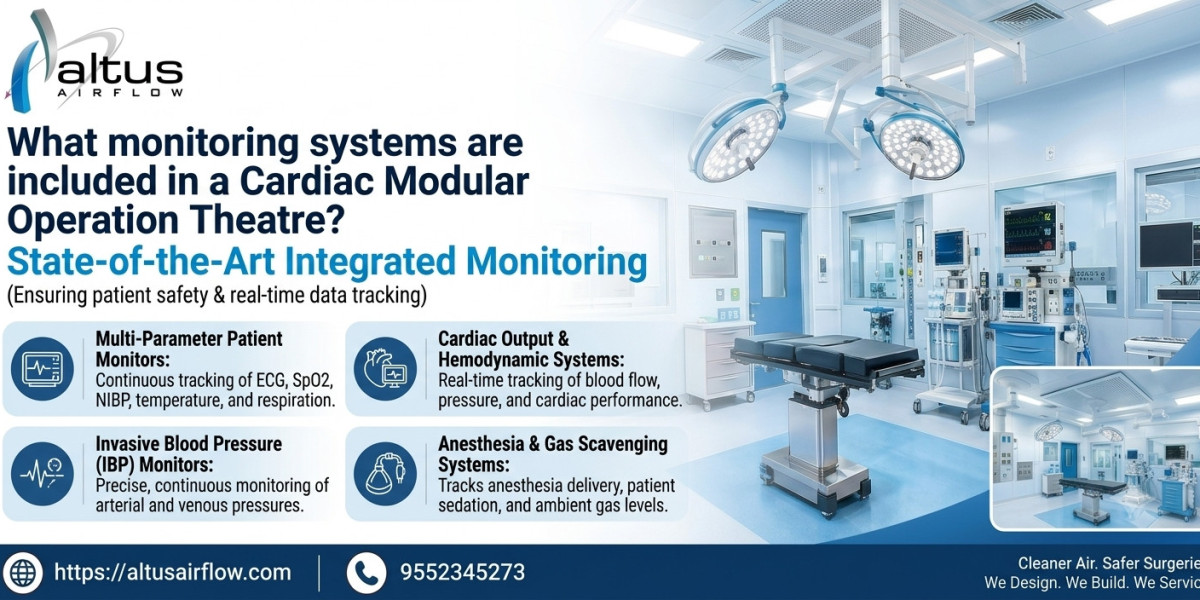
8. Patient Monitoring and Surgical Equipment Integration
Apart from environmental monitoring, cardiac operating theatres require advanced patient monitoring technologies.
These systems provide clinicians with essential information about a patient's physiological condition during surgery.
Common patient monitoring parameters include:
Electrocardiography (ECG).
Heart rate.
Blood pressure.
Oxygen saturation.
Respiratory rate.
Body temperature.
End-tidal carbon dioxide.
Depending on the surgical procedure, additional specialized monitoring equipment may be integrated.
For example, cardiac surgical environments may require connections with anaesthesia workstations, invasive pressure monitoring equipment, and other specialized clinical technologies.
Digital displays allow medical professionals to observe patient information during procedures.
Equipment integration should be carefully planned to ensure appropriate electrical connections, data compatibility, accessibility, and uninterrupted clinical workflows.
9. Centralized Monitoring and Building Management Systems
Modern operating theatres increasingly use centralized monitoring platforms to bring different technical parameters together.
A centralized monitoring interface can help hospital engineering teams observe environmental and infrastructure conditions from a designated control station.
Depending on system design, it may integrate:
HVAC operating status.
Temperature and humidity readings.
Pressure differential measurements.
Filter pressure-drop alarms.
Electrical power status.
Medical gas alarm information.
Equipment fault notifications.
Centralized monitoring offers several operational advantages.
Improved visibility: Technical teams can review important infrastructure information through a common interface.
Faster fault identification: Automated alarms help identify abnormal conditions.
Historical data: Recorded information supports maintenance planning and performance reviews.
Better coordination: Engineering teams can respond to technical issues more efficiently.
Operational reporting: Monitoring records help hospitals review system performance and identify recurring problems.
Hospitals should ensure that monitoring interfaces are designed with appropriate access permissions, cybersecurity controls, and data backup arrangements.
10. Alarm and Notification Systems
Alarm systems are essential because monitoring equipment must communicate important changes to responsible personnel.
Different alarms are configured according to the seriousness of the monitored condition.
Common alarm categories include:
Environmental alarms: Indicate temperature, humidity, or pressure deviations.
Ventilation alarms: Notify staff about air handling unit failures, fan problems, or abnormal filter pressure readings.
Medical gas alarms: Identify abnormal supply pressure or system faults.
Electrical alarms: Provide warnings about power supply interruptions or electrical monitoring conditions.
Equipment alarms: Notify operators about faults in connected medical or technical devices.
Alarm systems should use clear visual and audible notifications. Their thresholds must be established according to equipment specifications, clinical requirements, and applicable standards.
Staff training is also important so that alarms are interpreted correctly and appropriate responses are initiated.
11. What Should Hospitals Consider When Selecting Monitoring Systems?
Selecting appropriate monitoring technologies requires careful planning because every cardiac operating theatre has different clinical and technical requirements.
Hospitals should consider the following factors.
Integration Compatibility
Monitoring systems should communicate effectively with the HVAC infrastructure, electrical systems, medical gas alarms, and other relevant equipment.
Accuracy and Reliability
Sensors should provide reliable measurements and support calibration according to manufacturer recommendations.
Real-Time Notifications
Alarm systems should notify authorized personnel when important operating parameters move outside specified limits.
Easy-to-Use Interfaces
Digital control panels should display information clearly and allow technical teams to identify problems quickly.
Maintenance Support
Hospitals should consider sensor replacement, software updates, calibration, technical support, and spare-part availability.
Future Expansion
Monitoring infrastructure should allow suitable upgrades when hospitals introduce new surgical equipment or additional automation technologies.
A properly planned monitoring arrangement improves operational visibility and helps hospitals manage their surgical infrastructure more effectively.
12. How Does Monitoring Technology Improve Long-Term OT Performance?
Monitoring systems contribute to the long-term reliability of a cardiac operating theatre by helping hospitals identify infrastructure problems at an early stage.
For example, continuous HVAC monitoring can reveal unusual filter pressure changes, ventilation interruptions, or temperature variations.
Similarly, electrical monitoring can help identify backup power problems before they affect critical equipment.
Historical data also helps hospital engineering teams understand equipment performance and schedule preventive maintenance.
These technologies support several important objectives:
Reducing unexpected equipment downtime.
Maintaining controlled environmental conditions.
Supporting preventive maintenance.
Improving technical fault identification.
Maintaining operational records.
Supporting hospital quality management.
Monitoring systems cannot independently guarantee infection prevention or patient safety. Their effectiveness depends on correct installation, calibration, validation, staff training, and timely corrective action.
Conclusion
Monitoring systems are essential for maintaining environmental control, equipment reliability, and operational efficiency in modern cardiac operating theatres. Temperature and humidity sensors, pressure differential monitors, HEPA filter monitoring, HVAC controls, medical gas alarms, electrical monitoring devices, and patient monitoring equipment all contribute to a well-coordinated surgical environment.
Hospitals should select integrated technologies that meet their clinical requirements and applicable technical standards. Regular calibration, system testing, preventive maintenance, and staff training are equally important for achieving reliable performance.
Altus Airflow focuses on developing advanced modular healthcare infrastructure that supports controlled environments and efficient hospital operations. With appropriate system integration and technical planning, Altus Airflow helps hospitals create modern surgical facilities designed to support demanding cardiac procedures.
Frequently Asked Questions (FAQs)
1. What monitoring systems are included in a cardiac modular operating theatre?
A Cardiac Modular Operation Theatre can include temperature, humidity, pressure differential, air quality, HEPA filter, HVAC, medical gas, electrical, and patient monitoring systems.
2. Why is pressure differential monitoring important in cardiac OTs?
It helps maintain designed pressure relationships and supports controlled airflow between the operating theatre and adjacent spaces.
3. Are HEPA filter monitoring systems necessary?
Yes. They help monitor filter pressure conditions, while separate integrity testing verifies filtration performance.
4. Can HVAC systems be connected to centralized monitoring?
Yes. HVAC equipment can be integrated with centralized control platforms to display operating conditions and technical alarms.
5. What medical gas monitoring systems are used in cardiac theatres?
Medical gas alarm panels and pressure sensors monitor essential supplies such as oxygen, medical air, and vacuum.
Read Our Previous Blog --------------->Can imaging systems be integrated through Modular Cardiac OT Setup Services?





