For users who regularly transact on the TRON blockchain, this results in a clear overall cost advantage. Compared with paying transaction costs TronMax TRON energy rental directly in TRX, Energy Rental significantly lowers actual transaction fees, making frequent token transfers far more cost-effective. This allows users to retain more of their native tokens while maintaining full transaction functionality on the TRON networ
Once the balance is credited, you can immediately proceed to buy TRON Energy. Deposits are processed automatically and appear within seconds after the transaction is confirmed on-chain. Click "top up", and the bot will generate your personal top up address. We monitor your energy 24/7 and automatically replenish it as needed
From now on, you can pay USDT for gas, and, we can still help you to save up to 75% on gas costs! TokenPocket TRON(TRX) energy rent service also helps save on transaction fees. In addition to the daily transfer subsidy can help you save on gas costs, you can also enable the Energy Rental Service on TokenPocket! Alternatively, users TronMax TRON energy rental can utilize the rental market to pay for renting energy, which generally has lower overall costs than staking TRX energy token
As a result, the more TRX that is staked, the more Energy the account receives. The total amount of Energy produced by the TRON blockchain each day is fixed and distributed proportionally based on the amount of TRX staked by each account. If an account does not have enough available Energy, the system burns TRX to cover the corresponding Energy cost in order to complete the transaction. On TRON, each account receives a fixed amount of free Bandwidth every day, which can be used to cover basic transaction needs. Energy Rental is designed to address the cost issues caused by insufficient resources. However, when Bandwidth or Energy is insufficient, the system automatically burns TRX to make up for the required resources, which increases the actual transaction fe
For users seeking to balance efficiency, cost, and security on the TRON blockchain, this is a simpler, more practical, and reliable transaction option. For users who prioritize security, private keys remain securely stored in the secure chip of the CoolWallet hardware wallet throughout the Energy Rental process. It offers real-time Energy Rental solutions that help users obtain the required Energy before executing transactions, enabling smart contract operations to be completed smoothly. If the account does not have enough Energy, the TRON network automatically burns TRX to make up the difference, resulting in higher transaction fee
For users who regularly transact on the TRON blockchain, this results in a clear overall cost advantage. Compared with paying transaction costs directly in TRX, Energy Rental significantly lowers actual transaction fees, making frequent token transfers far more cost-effective. This allows users to retain more of their native tokens while maintaining full transaction functionality on the TRON network. By integrating Tronify Energy Rental, CoolWallet helps users reduce the amount of TRX burned due to insufficient Energy when sending tokens.
Choose TRX Energy amount & term
When a transaction involves smart contract interactions, such as TRC-20 token transfers, approvals, or other contract calls, it consumes Energy. Through the Energy Rental mechanism, users do not need to stake or hold TRX long term and can still complete transactions on the TRON network at a lower and more predictable cost. This is the main reason many users unknowingly pay higher fees when sending TRC-20 token transactions. When sufficient resources are available, transactions consume only Bandwidth and Energy and require little to no TRX. With this integration, CoolWallet users no longer need to manually manage complex resource configurations when sending TRC-20 transactions. However, many users are not familiar with TRON’s resource mechanism, such as Energy and Bandwidth.
Energy Price History
Before using wallets, conduct your own research and ensure compliance with local laws and regulations. Always keep your seed phrases and private keys secure and never disclose them to anyone. With this innovative feature, you can say goodbye to the hassle of staking TRX and waiting through long unfreezing periods. You can TronMax TRON energy rental think of TRON as the platform and TRX as the digital currency used to power transactions and operations on that platform. After selecting the USDD payment method, you will see a detailed leasing interface, which includes bandwidth and energy leasing parameters. TokenPocket TRON energy rent service also helps save on transaction fee
These tokens can then be used in network-based decentralized applications created by users. This makes Trust Wallet one of the most optimized, user-friendly ways to send TRON tokens — where even network fees work smarter for you. For TRON users, network fees can be unpredictable. Per-transfer cost is about $0.20 for users who stake or rent energy, and $1 to $5 for casual users who burn TRX directly. Finality lands in roughly three seconds, fees are predictable, and costs do not spike during volume surges. If the recipient address belongs to a different chain (Ethereum, BSC, Solana), the funds are stranded on Tron at an address with no controller.
How much does it cost to send USDT TRC20 in 2026?
The benchmark research from side-by-side TRC20 vs ERC20 fee analyses consistently show that frequent senders moving thousands of dollars per month can save substantial amounts by choosing TRC20 over ERC20. That makes TRC20 the default rail for remittance corridors (Philippines, Mexico, Nigeria, Argentina), peer-to-peer crypto commerce, and centralized-exchange withdrawals where users want to minimize fee leakage on small balances. For frequent or mass transfers, freezing is more cost-effective, so businesses need to optimize Tron fee spending. To double your daily Bandwidth and send 3–4 TRX transactions without fees, you need to freeze around 600 TRX, which at the time of writing is about $167. This payment doesn’t go to a person but to the network nodes (Tron nodes) that use their resources to confirm and store your transaction. It acts as "fuel" — used for activating new addresses, staking, paying fees, and performing other network operation

منشورات شائعة
-
 Dianabol Real Before & After Results, Timing Secrets, and Critical Safety Protocols
بواسطة santogavin164
Dianabol Real Before & After Results, Timing Secrets, and Critical Safety Protocols
بواسطة santogavin164 -
Datacenter Proxies Plus Local CAPTCHA Solving
بواسطة ulysses54q7161
-
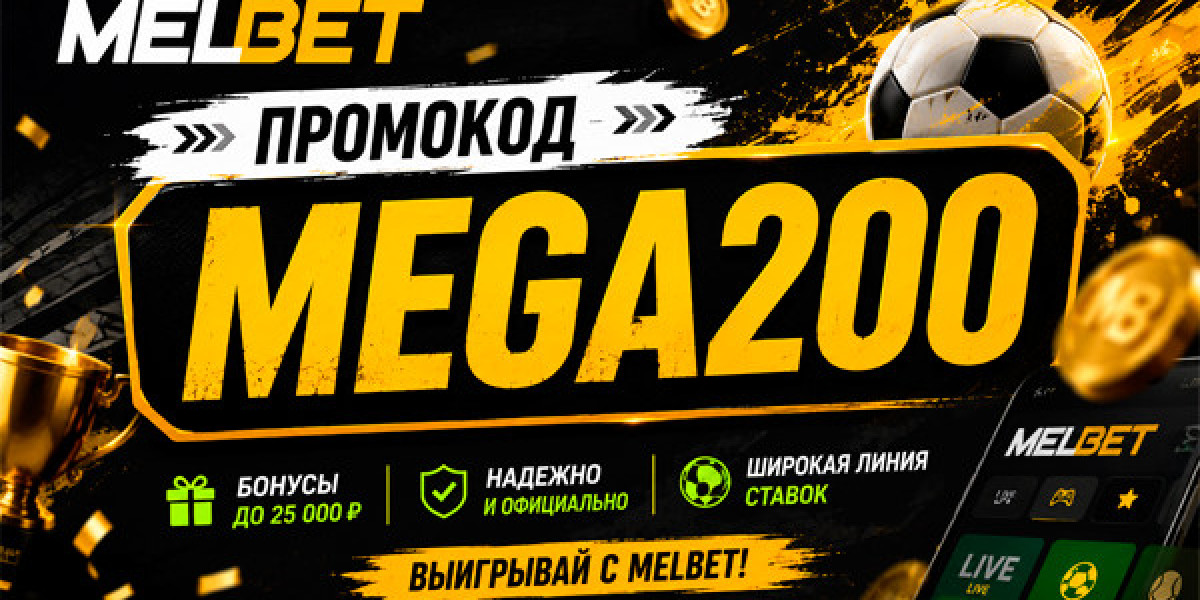 Melbet Промокод На Фриспины 2026: GAME888 - Бонус До 25,000 ₽
بواسطة haveyona23
Melbet Промокод На Фриспины 2026: GAME888 - Бонус До 25,000 ₽
بواسطة haveyona23 -
 Melbet Промокод При Регистрации Бонус 2026: WAP555
بواسطة haveyona23
Melbet Промокод При Регистрации Бонус 2026: WAP555
بواسطة haveyona23 -
 Melbet Казино Промокод: GAME888
بواسطة haveyona23
Melbet Казино Промокод: GAME888
بواسطة haveyona23